
Elena Long · 12 September 2026
Analyzing Visibility Fluctuations in the Context of Service Provider Switches
Service provider switches introduce measurable shifts in website visibility across search platforms and monitoring tools, and these changes stem from technical adjustments in DNS configurations, IP address allocations, and server response patterns. Researchers have documented how even brief periods of propagation delay can affect crawling frequency while data from industry reports shows that sites undergoing migration often experience temporary drops in indexed pages before stabilization occurs. Observers note that the scale of fluctuation depends on the type of provider involved, whether it is a hosting service, content delivery network, or domain registrar, and studies indicate that proper pre-switch preparations reduce the duration of any visibility impact.
Technical Mechanisms Behind Visibility Changes
When organizations transfer operations from one provider to another, DNS records require updates that trigger propagation across global servers, and this process creates windows where search engine bots encounter inconsistent information about site location and availability. Experts have observed that IP address changes frequently lead to altered geolocation signals which in turn influence localized search results while server header modifications can reset certain caching mechanisms that previously supported steady crawl rates. Data collected through large-scale monitoring in 2025 revealed that sites with high daily traffic volumes recover indexing speed faster than smaller properties because frequent bot visits accelerate the re-discovery of new infrastructure details.
Yet the relationship between switch timing and visibility outcomes remains complex because simultaneous changes in multiple settings compound their individual effects. Those who have tracked migrations report that combining a registrar transfer with hosting relocation extends the period of uncertainty compared to isolated changes, and figures from network performance analyses confirm that overlapping updates correlate with wider swings in daily impression counts. In September 2026, several monitoring platforms recorded clusters of visibility events tied to bulk migrations among mid-sized e-commerce domains that had coordinated their switches during low-traffic windows.
Measurement Approaches and Data Patterns
Analysts rely on a combination of search console data, third-party rank trackers, and server log reviews to quantify visibility shifts during provider transitions, and these sources together provide timelines that map impression changes against specific migration milestones. Research indicates that visibility metrics often follow a characteristic dip-and-recovery curve where initial declines appear within 24 to 72 hours of DNS cutover followed by gradual restoration over subsequent weeks. People who maintain continuous tracking note that certain keywords tied to branded queries exhibit smaller fluctuations than generic terms because established backlink profiles help maintain relevance signals despite infrastructure changes.
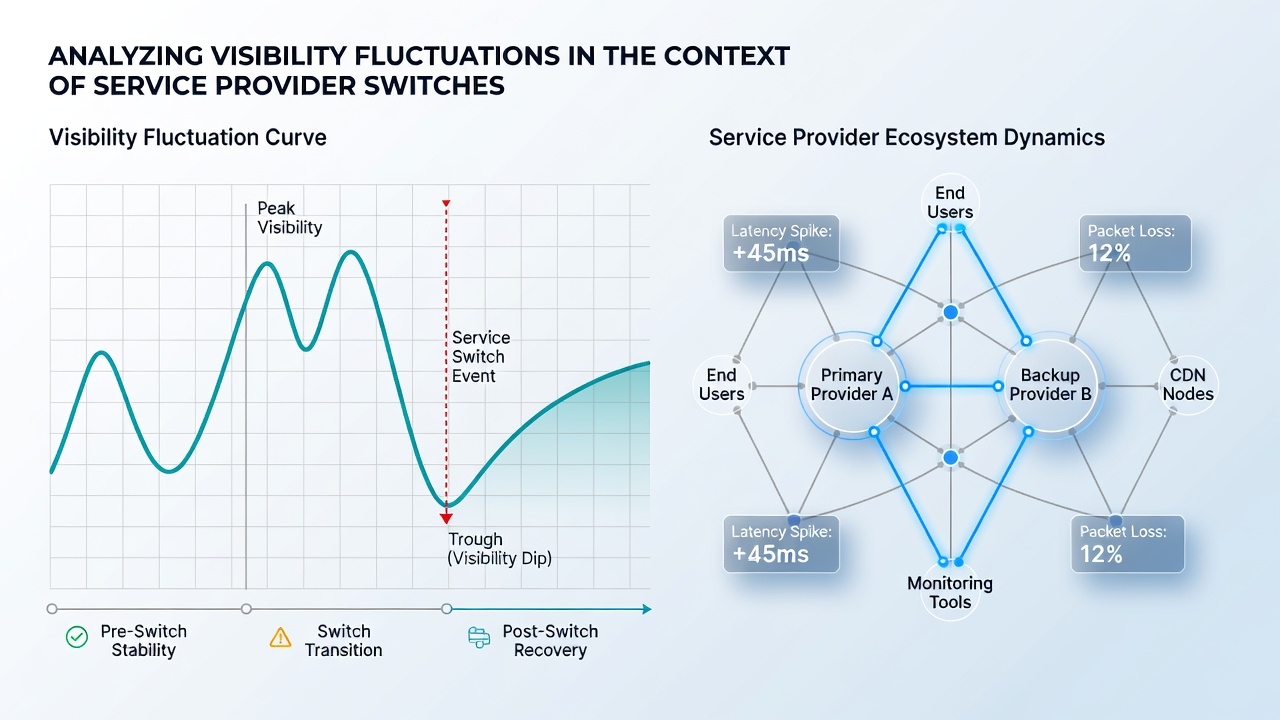
Case examples from enterprise migrations illustrate how proactive verification steps limit the extent of disruption, and one documented instance involved a media outlet that pre-validated new server configurations through staging environments before updating live DNS entries. According to records maintained by the Internet Corporation for Assigned Names and Numbers, domain transfers executed with sufficient authorization buffers experience fewer propagation-related interruptions than rushed processes. A separate study published by researchers at the University of California examined over 400 site migrations and found that those incorporating gradual traffic shifting through load balancers demonstrated narrower visibility variance than abrupt cutovers.
Factors That Influence Recovery Speed
Recovery timelines vary based on prior site authority, content freshness, and the responsiveness of the new infrastructure to bot requests, and sites with regularly updated sitemaps tend to regain full indexing coverage more quickly than static counterparts. Observers have noted that providers offering enhanced logging and real-time status reporting enable faster identification of crawl errors that arise post-switch, while those relying solely on default configurations may encounter prolonged periods of reduced visibility. Evidence from performance audits shows that mobile-first indexing amplifies the effects of any server response delays because mobile crawlers often operate on tighter schedules than desktop equivalents.
Geographic distribution of the new provider's points of presence also plays a measurable role, and organizations that select services with broad international coverage report steadier visibility across regional search markets. Data compiled by the Australian Communications and Media Authority highlights how domestic infrastructure choices can affect local search prominence following provider changes, particularly for news and directory-style websites. Those managing multiple properties have found that staggered migration schedules prevent simultaneous visibility dips across an entire portfolio.
Conclusion
Visibility fluctuations during service provider switches follow predictable technical patterns that monitoring data can capture and that targeted preparation steps can moderate. Research from multiple regions demonstrates that DNS management, server configuration, and migration sequencing each contribute distinct influences on search indexing and impression metrics. Organizations that align their transition plans with observed recovery behaviors achieve more consistent visibility outcomes across the migration period.